
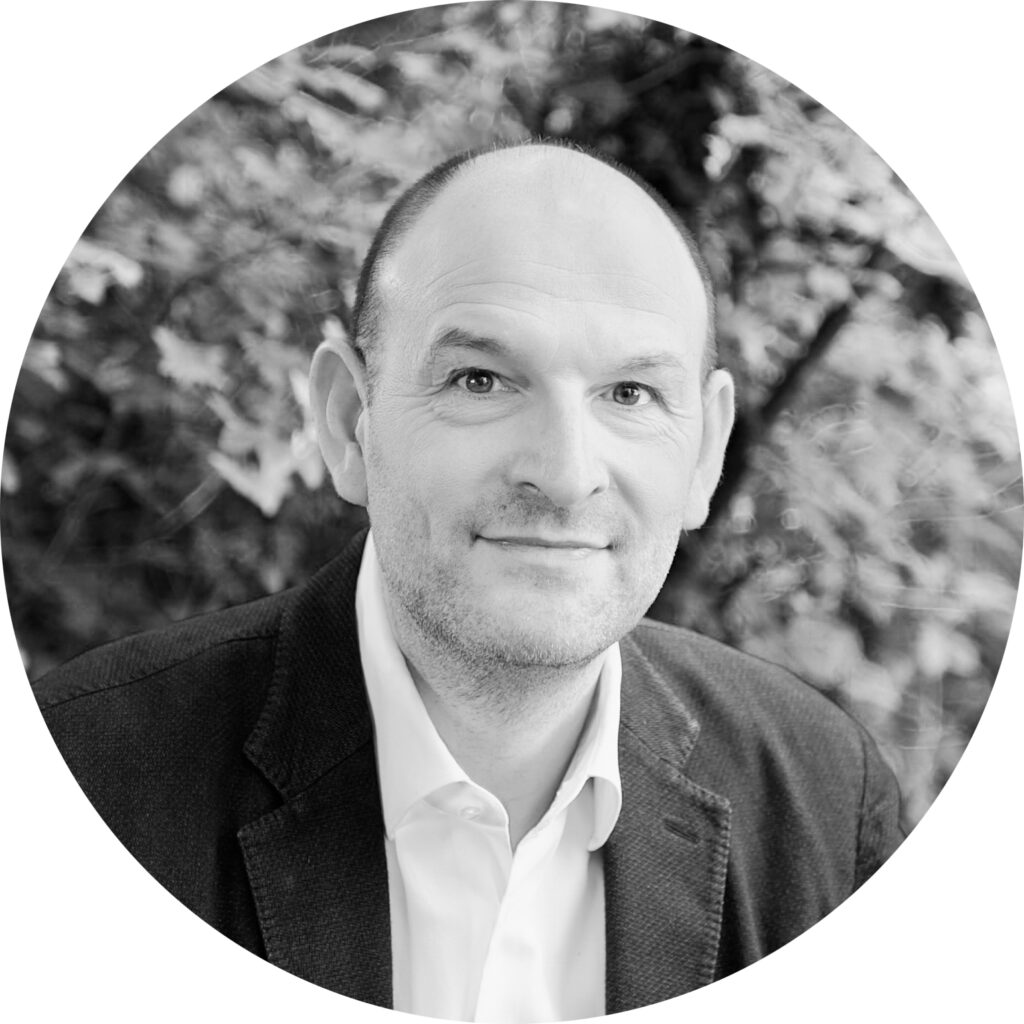
Biography
Andrew Rutter leads a consultancy, rutterdesign, specialising in Advanced Manufacturing Technologies, the economics of supply chains, and Agile Factory Design for the manufacture of complex molecules. He is currently advising leading Pharmaceutical companies and Governments on how to accelerate their programmes to adopt technologies like Continuous Manufacture, Modularisation of Systems, Automation, and the supporting Process Design Workflows – the means of utilising the technology.
Prior to setting up rutterdesign, he led the implementation of GSK’s Continuous Manufacturing and advanced manufacturing programme, which culminated in the approval of 2 multistage Active Pharmaceutical processes. This programme explored applying modularised systems for small and large molecules, including vaccines and oligonucleotides. Before this he worked in Petrochemical Manufacture and for IBM. He also helped author ICH Guidance for Continuous Manufacture as a member of the ICH Q13 Expert Working Group.
Outside of consulting, he is a Visiting Professor at the Strathclyde Institute of Pharmacy and Biomedical Sciences, and is actively researching methodologies for linking Chemistry, Engineering and Supply Chain decisions. Andrew is a Fellow of the Royal Academy of Engineers, as a Fellow he has advised the UK government on Systems Engineering approaches to solving complex problems, and participated in resilient manufacture discussions.
Topic
Diseconomies of Scale; how Automation, Process Intensification and Politics are changing Manufacture of Complex Molecules.
For technologies to have impact, there must be an alignment of capability and need to change. In this talk I will describe how advances in technologies such as process intensification, automation, digitisation/modelling, and modularisation align with the political need for answers to sustainable, resilient and safe supply of increasingly complex and niche complex molecules (medicines). At the heart of this change is the balance between societal need and technology capability and the need to balance reward for invention with affordability for society.
Technological change has happened many times before, so I will draw on historical precedents to give context to the manufacturing change we are currently navigating. I will also illustrate the complexity of transition from my experience of how existing frameworks and workflows are hard to break, even when the manufacturing technology is proven – this is more about the human side of change; people, perceptions and beliefs.
To conclude, I shall explore some scenarios and pathways for change, some incremental, some more radical.